
Attendance: 29 Members: 26 (of 48) 54% Guests: 3
Speaker: Dr Sabina Andron Topic: Graffiti - the Good, the Bad and the Ugly
Dr Sabina Andron has been researching visual culture in cities for many years to understand how we create and resist social orders through the use of public signs and images. She is currently an Australian Research Council (ARC) Fellow with a prestigious "Discovery Early Career Research Award" (DECRA) at the University of Melbourne’s Centre for Cities.
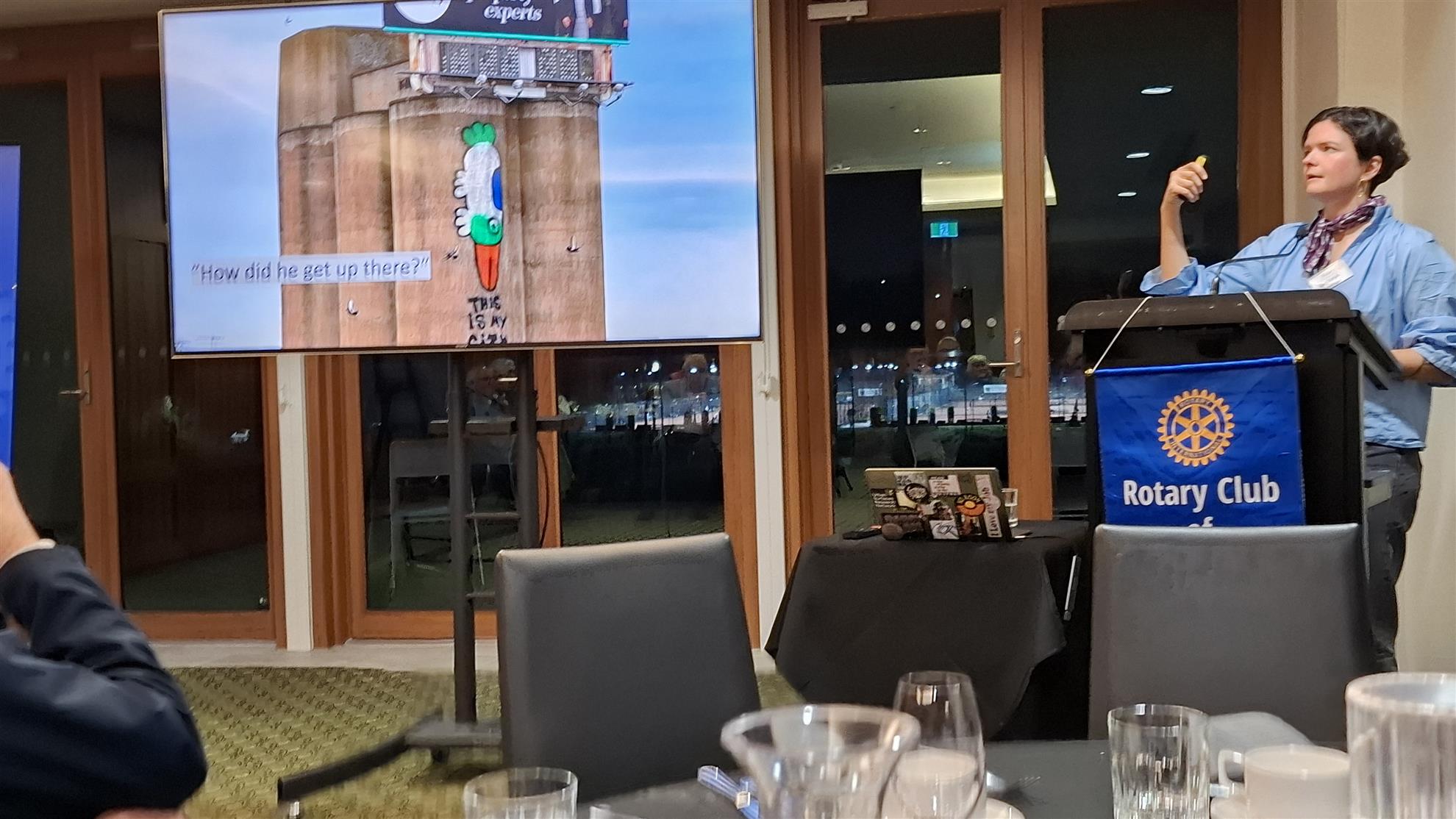
Sabina’s energetic presentation began with a lively discussion on the recent “Pam the Bird” piece at Bolte Bridge. Everyone was immediately engaged. After several years of anonymity, “Pam’s artist” was at last discovered. Interestingly, the public response has been varied - some saying it should stay while others want it removed. What do you think?
Sabina addressed a series of contradictions at the core of how graffiti is perceived and managed in the city. She calls these contradictions “tensions”.
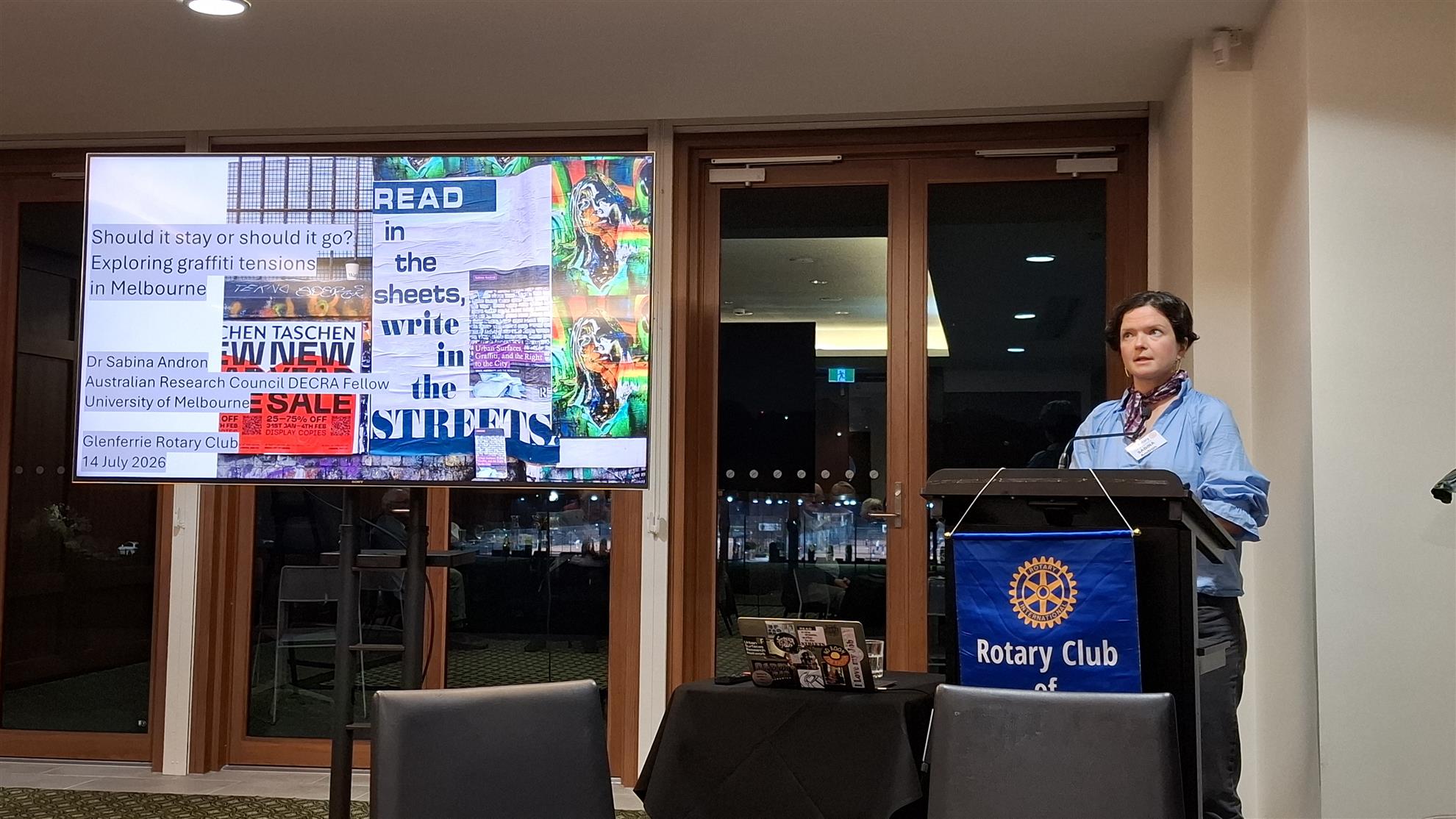
There are several “tensions” surrounding graffiti:
Tension 1. Art and vandalism: Graffiti is creative spatial engagement and a crime against property.
- An interesting fact was that with a property wall which is right on the boundary of the footpath, it is both private AND public property.
Tension 2. Local and global: Graffiti is a global popular culture and a local negotiation of the city
- Questions were raised including why some countries are graffiti-free (e.g. Japan, Uzbekistan, Singapore) while others like Australia and England are not. Freedom, respect, the culture of the country, etc, all play a part in how we treat (react to?) the land we live in.
Tension 3. Condemnation and fascination: Graffiti causes reactions of disgust and enchantment
- Hosiers Lane has become a tourist attraction.
Tension 4. Removal and protection: Graffiti consumes tremendous resources for management and removal and creates attachment to place and urban culture
- Graffiti removal costs over $1million each year and contributes to polluting the waterways with the hundreds of litres of chemicals that are used in its clean-up.
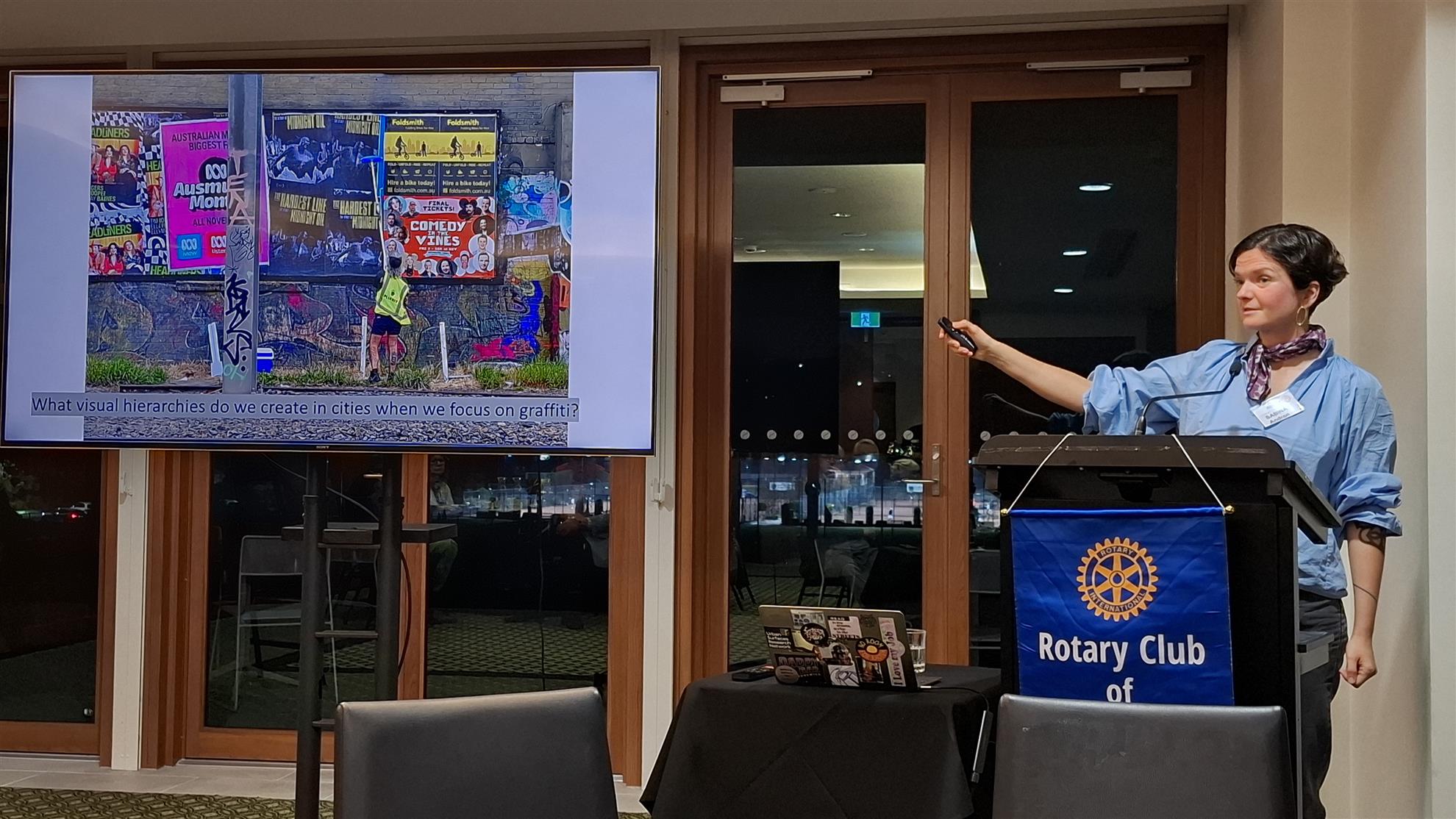 Debates continue on “What kind of people are the graffiti perpetrators”? Why do they feel the need to scribble or paint on public surfaces?
It was a most interesting, stimulating and enlightening talk which we all thoroughly enjoyed.
Sabina’s other ongoing work includes street posters and urban surface maintenance in Melbourne and urban visual heritage in Kampala, Uganda.

Dr Sabina Andron is:
Author of “Urban surfaces, graffiti, and the right to the city”
Co-founder the Urban Surfaces Research Network in 2023
ABC Top5 Humanities winner in 2024
- Expert commentator in the documentary "Banksy and the Stolen Girl" (2023).
Chair of the Australasian Early Career Urban Research Network (AECURN)
Co-Leader of the Social and Visual Justice in the City research cluster at the Melbourne Centre for Cities.
Recipient of the 2020 Prosser award for outstanding work in visual methodologies, awarded by the International Visual Sociology Association